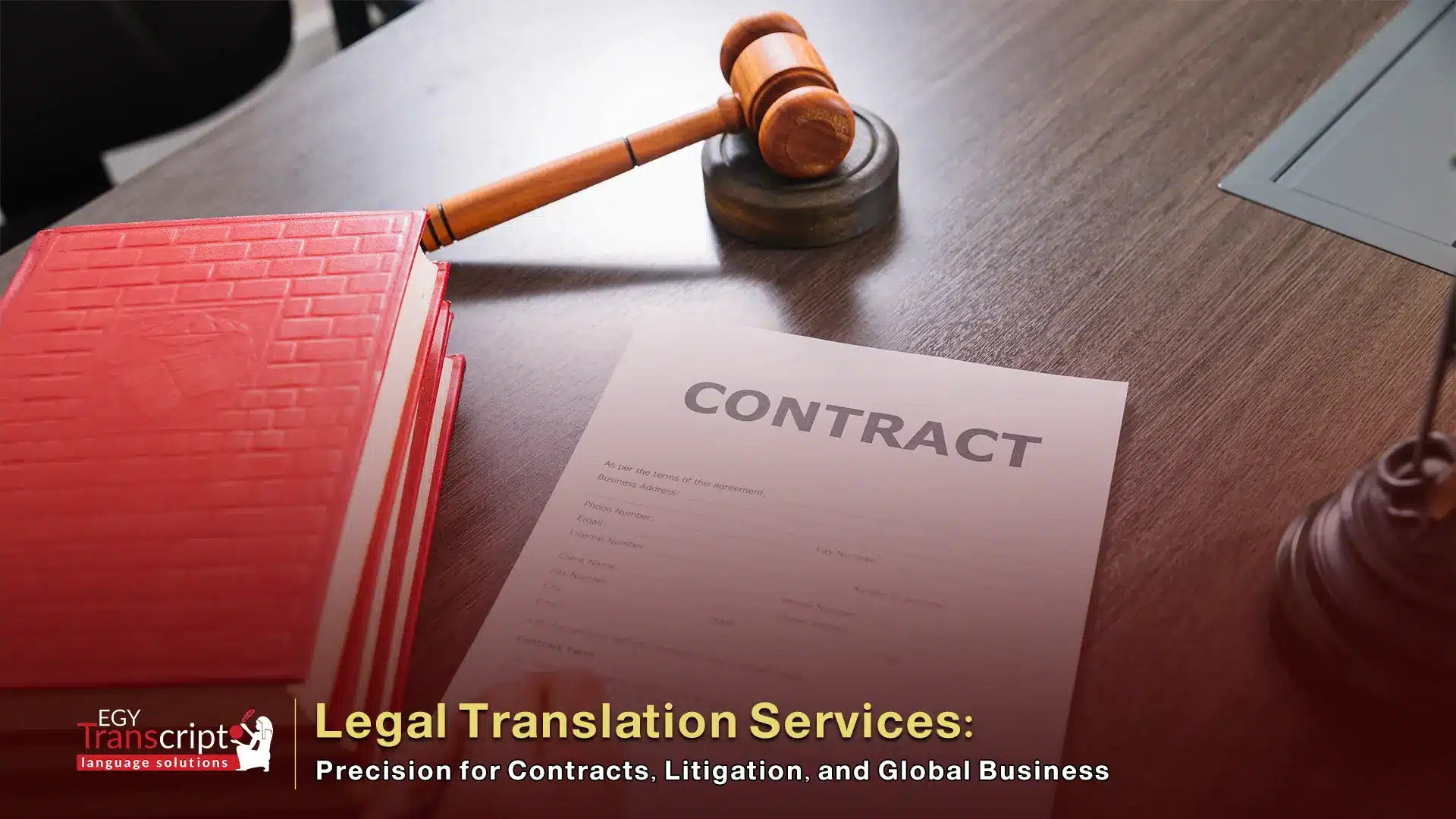
Legal translation is the specialized practice of converting documents from one language to another within the field of law. It requires an expert command of both the source and target languages, coupled with a deep understanding of the legal systems, terminology, and cultural contexts involved. This service is not merely about linguistic substitution, it is about accurately transferring legal concepts, intent, and enforceability from one jurisdiction to another. Whether for an international merger, a court case involving foreign evidence, or a visa application, professional legal translation services ensure that documents are not only linguistically correct but also legally valid and compliant.
The Critical Importance of Specialist Legal Translators
Why does legal translation demand such a high level of specialization? Law is inherently bound to a specific country, culture, and system. A concept like a “limited liability company” in the United States does not have a perfect, one-word equivalent in every other legal system. A specialist legal translator navigates these conceptual gaps. They understand that a single mistranslated term in a contract such as confusing “warranty” for “guarantee” can alter liabilities and lead to significant financial loss or litigation. Unlike general translation, the work product here carries direct legal consequences, making the role of the translator akin to that of a legal professional safeguarding the integrity of the document.
Common Document Types Requiring Legal Translation Expertise
The scope of legal translation is vast, covering numerous documents essential for cross-border activities.
Contracts and Commercial Agreements
This is a primary area of need. Translating joint venture agreements, service level agreements (SLAs), non-disclosure agreements (NDAs), and terms of service requires absolute precision. The translator must ensure that all parties’ obligations, rights, termination clauses, and dispute resolution mechanisms are rendered with unambiguous accuracy in the target language, maintaining the document’s legal force.
Litigation and Dispute Resolution Documents
When legal proceedings cross borders, a multitude of documents must be translated for courts, arbitrators, and legal teams. These include:
- Complaints and pleadings
- Witness statements and expert reports
- Discovery materials, including emails and internal correspondence
- Court orders and judgments
These translations must be forensically accurate, as they form the factual and legal basis for arguments and decisions. They almost always require certification for formal submission.
Corporate and Regulatory Compliance Documents
Businesses operating internationally must translate documents for incorporation, governance, and regulatory filings. This includes articles of association, annual financial reports, board resolutions, and submissions to regulatory bodies like the Securities and Exchange Commission (SEC) or its international equivalents. Inaccuracies can delay processes or result in compliance failures.
Intellectual Property (IP) Documentation
Protecting patents, trademarks, and copyrights globally hinges on precise translation. Patent applications are particularly sensitive, as the specific wording defines the scope of the invention’s legal protection. A subtle error can narrow the patent’s claims or render it vulnerable to challenge.
Personal Documents for Official Use (Often Certified)
While sometimes categorized separately, documents like birth certificates, marriage certificates, divorce decrees, and police records for immigration or academic purposes are legal translations. They must adhere to strict formatting guidelines and certification requirements of authorities like USCIS, the UK Home Office, or various embassies. You can learn more about this specific requirement through our guide on certified translation services.
The Professional Legal Translation Workflow: Accuracy by Process
A trustworthy provider follows a rigorous, multi-stage process designed to eliminate error, similar to the meticulous protocols we uphold at egytranscript.
- Project Analysis and Specialist Assignment: The project manager assesses the document’s subject matter (e.g., maritime law, pharmaceutical patents), complexity, and target jurisdiction. A translator is selected who is both a native speaker of the target language and a specialist in that precise legal area.
- Initial Translation by a Legal Expert: The assigned specialist produces the first draft, focusing on conceptual accuracy over literal translation. They choose terminology that is legally appropriate and effective in the target jurisdiction’s legal culture.
- Editing by a Second Legal Linguist: A second qualified legal translator reviews the draft against the source text. This critical step checks for terminological consistency, conceptual fidelity, and any potential omissions, ensuring the translation meets professional standards.
- Formatting, Certification, and Quality Assurance: The final document is formatted to mirror the original’s layout. If required, a Certificate of Accuracy is prepared. A final QA check verifies that all client specifications, formatting rules, and certification elements are correct before secure delivery.
Choosing a Legal Translation Provider: Key Selection Criteria
Selecting the right partner is a strategic decision. Here are the essential factors to consider:
- Translator Qualifications: Ideal translators possess advanced legal qualifications (LLB, JD, or equivalent) and/or accreditation from professional bodies like the Chartered Institute of Linguists (CIOL) or equivalent, with proven experience in your required field.
- Jurisdictional Expertise: Ensure the provider has experts for your specific language pair and legal system combination (e.g., English-to-Arabic for UAE civil law, or Spanish-to-English for US common law).
- Robust Quality Assurance: A multi-step process involving translation and editing by separate specialists is non-negotiable. Inquire about their specific QA protocol.
- Security and Confidentiality: The provider must have enterprise-grade data protection, secure client portals, and enforceable NDAs with all personnel. They should understand the ethical duty of confidentiality akin to a law firm.
- Guarantees: Reputable services stand behind their work with acceptance guarantees for official bodies and professional liability insurance.
The High Cost of Inaccurate Legal Translation
The risks of using unqualified translators, machine translation, or bilingual staff for legal documents are severe and tangible:
- Contractual Ambiguity or Breach: Misinterpreted clauses can lead to unintended obligations, failed partnerships, and expensive lawsuits.
- Court Case Dismissal or Loss: Incorrectly translated evidence or pleadings can undermine a legal argument, leading to an unfavorable judgment.
- Government Application Rejection: Immigration, visa, or business license applications can be denied or significantly delayed due to improper translation, costing time and money.
- Loss of Intellectual Property Rights: A poorly translated patent can result in weak or invalid protection, forfeiting a competitive advantage.
Investing in professional legal translation services is not a line-item cost, it is essential risk management that protects your legal position, financial interests, and business reputation on the global stage.
What is the main difference between a legal translator and a certified translator?
A legal translator specializes in the subject matter of law, requiring deep knowledge of legal terminology and systems. A certified translator provides a formal attestation (a certificate) that their translation is accurate and complete, which is often required for official submission. Many legal translators are also certified translators, as their work frequently needs to be formally certified for courts and government agencies.
How long does it typically take to translate a legal contract?
For a standard 10-page contract, a professional service typically requires 3 to 5 business days for a high-quality translation and review process. Rush services (24-48 hour turnaround) are commonly available but incur a premium. The timeline depends on the document’s complexity, technicality, and length.
Are machine translation tools like Google Translate safe for preliminary legal document review?
No, they are highly unsafe for any legal purpose. Machine translation lacks understanding of legal context, jargon, and nuance. Relying on it, even for a preliminary understanding, can create dangerous misconceptions about the document’s content and intent. It should never be used as a basis for legal decision-making.
What credentials should I look for in a legal translation service?
Look for providers that employ translators with formal legal qualifications and/or membership in professional translation associations. The service itself should have a clear quality assurance process, robust data security policies, and offer a certificate of accuracy with their work. Client testimonials and experience with specific document types are also strong indicators.
Do you need the original hard copy of my legal document to translate it?
Almost never. A clear, complete, and legible digital scan (PDF) is perfectly sufficient for translation. You should never send irreplaceable original documents through the mail unless explicitly required and with secure, tracked delivery. Professional services work entirely from digital copies.
Can you handle translations for both common law and civil law systems?
Yes, a top-tier legal translation service will have specialists for different legal systems. This expertise is crucial, as translators must understand the fundamental differences between systems like Common Law (US, UK) and Civil Law (France, Germany, Egypt) to find correct conceptual equivalents, not just word-for-word translations.
What is the process if a court or authority rejects my translated document?
Reputable legal translation services stand by their work with an acceptance guarantee. If a translation is rejected due to an error in translation or certification format (not due to client-provided incorrect information), they will typically re-translate or correct the document at no cost and work with you to meet the authority’s specific requirements.